
100% pure Brazilian soybean oil, refined or crude grade.
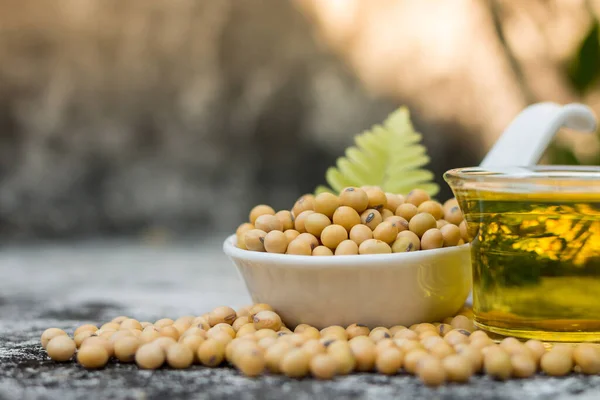
Soybean oil pressed and processed from Grade A Brazilian soybean, available in refined, bleached and deodorised (RBD) or crude grades. As a Brazilian soybean oil exporter, we pack from retail bottles through to bulk flexitank, for food processing and retail supply chains.
- 100% pure soybean oil, no blending or additives
- Refined (RBD) and crude grades available
- High nutritional value, light flavour profile
- Custom packaging: bottles, jerrycans, drums, flexitank or bulk
- Long shelf life with proper storage
- Consistent quality control on every batch
- Competitive bulk pricing for volume buyers
Understanding Soybean Oil.
Soybean oil is extracted from crushed soybean and sold either crude (unrefined, typically for further processing) or refined, bleached and deodorised (RBD, ready for direct food use). The extraction itself is almost always solvent-based — hexane extraction is the global industry standard because it recovers oil far more completely than mechanical pressing alone, leaving a defatted meal behind that becomes soybean meal. Crude oil straight off the extraction line still contains phospholipids, free fatty acids, pigments and odour compounds, which is why most food-grade buyers specify RBD rather than crude. [Specify which grade(s) you supply and whether you offer both.]
How Crude Oil Becomes RBD Soybean Oil
Refining crude soybean oil into RBD (refined, bleached, deodorised) oil is a four-stage process. Degumming removes phospholipids using water or a mild acid, producing lecithin as a by-product. Neutralisation (alkali refining) uses a caustic soda wash to strip out free fatty acids, which separate out as soap stock. Bleaching passes the oil through activated clay to adsorb pigments and remaining trace impurities, lightening its colour. Deodorisation is the final step — steam distillation under vacuum at high temperature removes volatile compounds responsible for odour and taste, leaving a neutral, light-coloured oil with a longer shelf life than crude. [Note whether your refining is done in-house or by a partner refinery, and confirm the specific process controls you can speak to.]
Nutritional & Functional Profile
Refined soybean oil is roughly 15% saturated fat, 23% monounsaturated fat (mainly oleic acid) and 58% polyunsaturated fat — predominantly linoleic acid (omega-6), with a smaller share of alpha-linolenic acid (omega-3). Like all plant oils it's cholesterol-free, and it retains natural tocopherols (vitamin E), which also act as a mild antioxidant that helps extend shelf life. RBD soybean oil has a smoke point of approximately 230°C (446°F), which puts it comfortably in range for frying, baking, sauteing and most general food-service use. Its high linoleic acid content also makes it a semi-drying oil, which is part of why it's used in some industrial and biodiesel applications beyond food.
How It Compares To Other Vegetable Oils
Buyers evaluating soybean oil against alternatives typically weigh three things: fat profile, price, and supply stability. Against palm oil, soybean oil is liquid at room temperature with a lower saturated-fat share, while palm oil is more oxidatively stable for high-heat deep frying but carries more saturated fat. Against sunflower oil, the polyunsaturated profile is broadly similar, but soybean oil tends to be more price-competitive at bulk volumes because of the scale of South American production. Against canola (rapeseed) oil, canola runs higher in monounsaturated fat and lower in polyunsaturated fat; soybean oil's wider omega-6 content and Brazil's export volume make it an easier oil to source consistently in large, containerised or bulk-vessel quantities. In practice, most buyers choose between these oils based on landed cost and existing supply relationships as much as the fat profile itself, which is why having a dependable, documented Brazilian source matters as much as the oil's technical specification.
Brazilian Soybean Oil — typical export specification.
| Parameter | Value |
|---|---|
| Grade | Refined (RBD) / Crude |
| Free Fatty Acid (FFA) | 0.1% max (RBD) · up to 2% (Crude) |
| Moisture & Impurities | 0.1% max (RBD) · 0.2% max (Crude) |
| Colour (Lovibond) | 3.0 Red max (RBD, 5.25" cell) |
| Peroxide Value | 5 meq/kg max |
| Iodine Value | 120–141 (typical for soybean oil) |
| Packaging | 1L / 5L bottles, 20L jerrycans, 180kg drums, flexitank, bulk |
| Origin | Brazil |
| Minimum Order Quantity | 1 x 20FT container (~25 MT) for trial orders; bulk vessel from 5,000 MT |
| Loading Port | Santos, Brazil (other Brazilian ports available on request) |
| Payment Terms | LC at Sight, or TT (30% advance / 70% against shipping documents) |
| Lead Time | 15–30 days after order confirmation, subject to vessel schedule |
Values above reflect typical international trade benchmarks for this product category, not a verified lab result for your specific business. Confirm actual figures against your own certificate of analysis before publishing, and update anything that differs from your true product. [Add MOQ], [Add Port], [Add Terms] and [Add Lead Time] are business-specific and still need your real information.
Where this product is used.
Retail & food-service cooking oil
Refined soybean oil's neutral flavour and ~230°C smoke point make it a versatile everyday cooking, frying and baking oil.
Food and snack manufacturing
Used as an ingredient oil in processed and packaged food production, from baked goods to fried snacks.
Industrial food processing
A common input oil across a range of food manufacturing applications where a stable, neutral fat is required.
Biodiesel feedstock
Crude soybean oil is a major global feedstock for biodiesel production, supported by Brazil's growing domestic blending mandate.
Sourced from the world's largest soybean supplier.
Brazil is the world's largest soybean producer, crushing a significant share of its harvest domestically before export. That scale supports a mature, competitively priced soybean oil export market, backed by port and logistics infrastructure built around high-volume vegetable oil shipments. Brazil's growing biodiesel blending mandate has also pushed domestic crushing capacity higher in recent years, which in practice means more crude oil available to refiners and, downstream, a steadier export supply of both crude and RBD soybean oil.
Keeping quality consistent after it arrives.
- Store in sealed containers away from direct sunlight and heat sources
- Avoid temperature fluctuations, which can accelerate oxidation
- Keep drums and flexitanks off damp flooring and away from strong odours
- Rotate stock on a first-in, first-out basis relative to production date
Packed to your requirement, shipped on your terms.
Available in 25kg / 50kg bags, jumbo bags, or full bulk vessel loads, with FOB, CFR or CIF Incoterms. Every shipment ships with certificate of origin, phytosanitary certificate, packing list and commercial invoice.
FAQs about Soybean Oil.
What's the difference between refined and crude soybean oil?
Refined (RBD) oil is processed for direct food use with neutral flavour and color; crude oil is unrefined and typically sold on for further processing.
What packaging sizes are available for soybean oil?
1L and 5L bottles, 20L jerrycans, 180kg drums, flexitank, or bulk vessel — packed to your order.
Can soybean oil be shipped by flexitank for large orders?
Yes — flexitank and bulk vessel options are available for high-volume orders.
Can I order both crude and refined soybean oil?
[Specify whether you offer both grades or only one.]
How should soybean oil be stored?
In sealed containers away from direct sunlight and heat, with temperature kept as stable as possible to limit oxidation.
Is Brazilian soybean oil suitable for biodiesel production?
Yes — crude soybean oil is a widely used global feedstock for biodiesel, and Brazil is one of the largest sources of soybean oil worldwide.
What is the smoke point of refined soybean oil?
Approximately 230°C (446°F), which makes it suitable for most frying, baking and general food-service cooking applications.
Is soybean oil safe for people with soy allergies?
Highly refined soybean oil generally contains negligible soy protein, and some food-safety authorities exempt it from allergen labelling requirements for that reason — but this varies by regulation and by how the oil was processed. [Confirm your product's specific protein-residual testing and the allergen labelling rules that apply in your buyer's destination market before making any allergen claim.]
Ready to request a quote for Soybean Oil?
Tell us your required quantity, packaging and destination port — we'll respond with pricing and lead time.